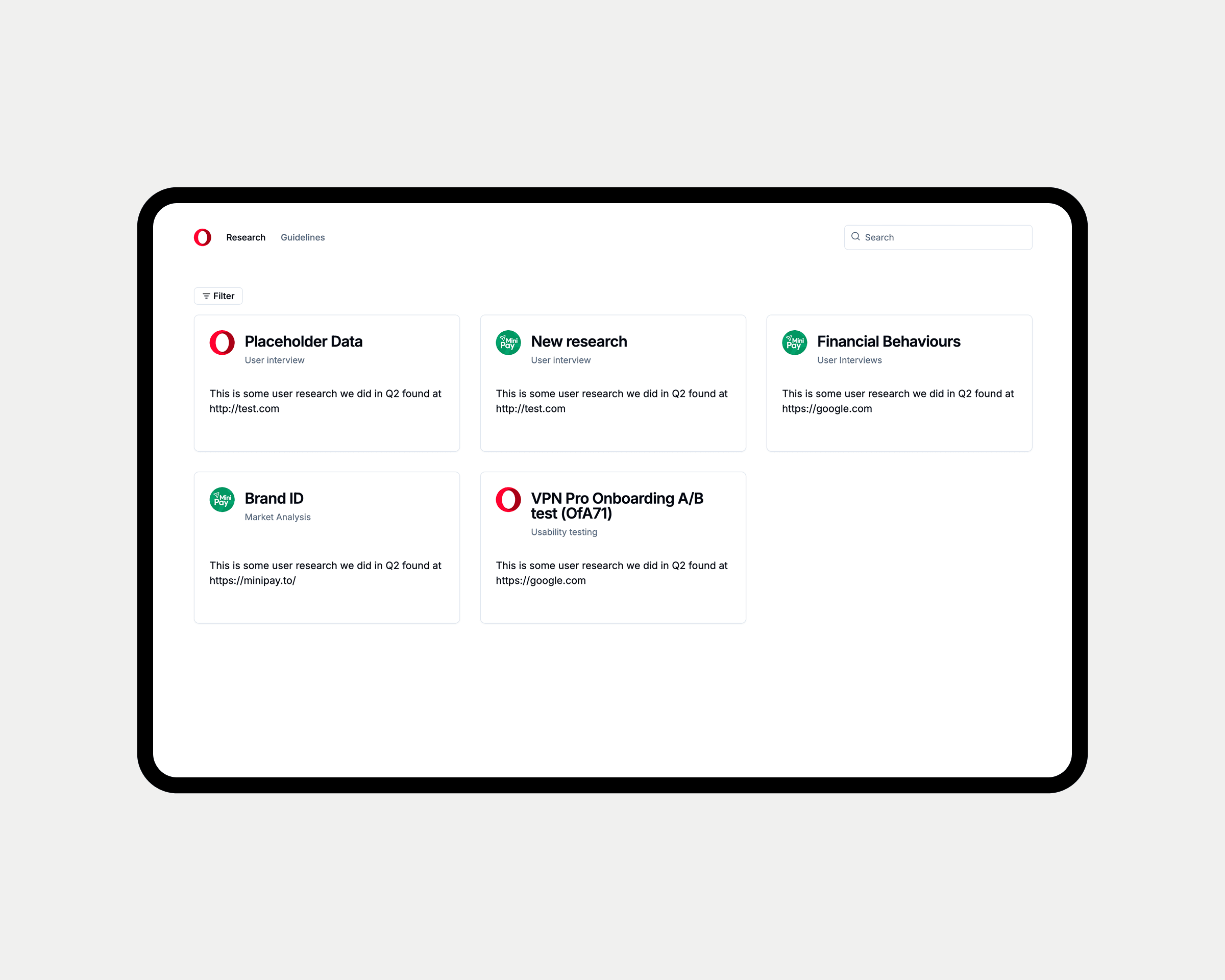
User Research Dashboard
A research knowledge hub built to improve how teams access and share user insights.
Year
2025
Role
Design & Development
Overview
User Research Dashboard was an internal tool for making existing research easier to find and use across the organisation.
Research was not always easy for busy stakeholders to access, making it difficult to know which studies had already been completed, which findings were relevant, or where to find them.
I designed and developed a central dashboard where people could browse research, filter it by team or category, and quickly understand the main findings.
Due to the internal nature of the project, I can only share selected parts of the work.
Why I Built It
The design team was carrying out valuable research, but there was no simple way for the wider organisation to see what already existed.
I saw an opportunity to make that work more accessible without introducing another platform for the team to maintain.
From Concept to Prototype
I started by designing and presenting the concept internally to design management to gather feedback and validate the direction.
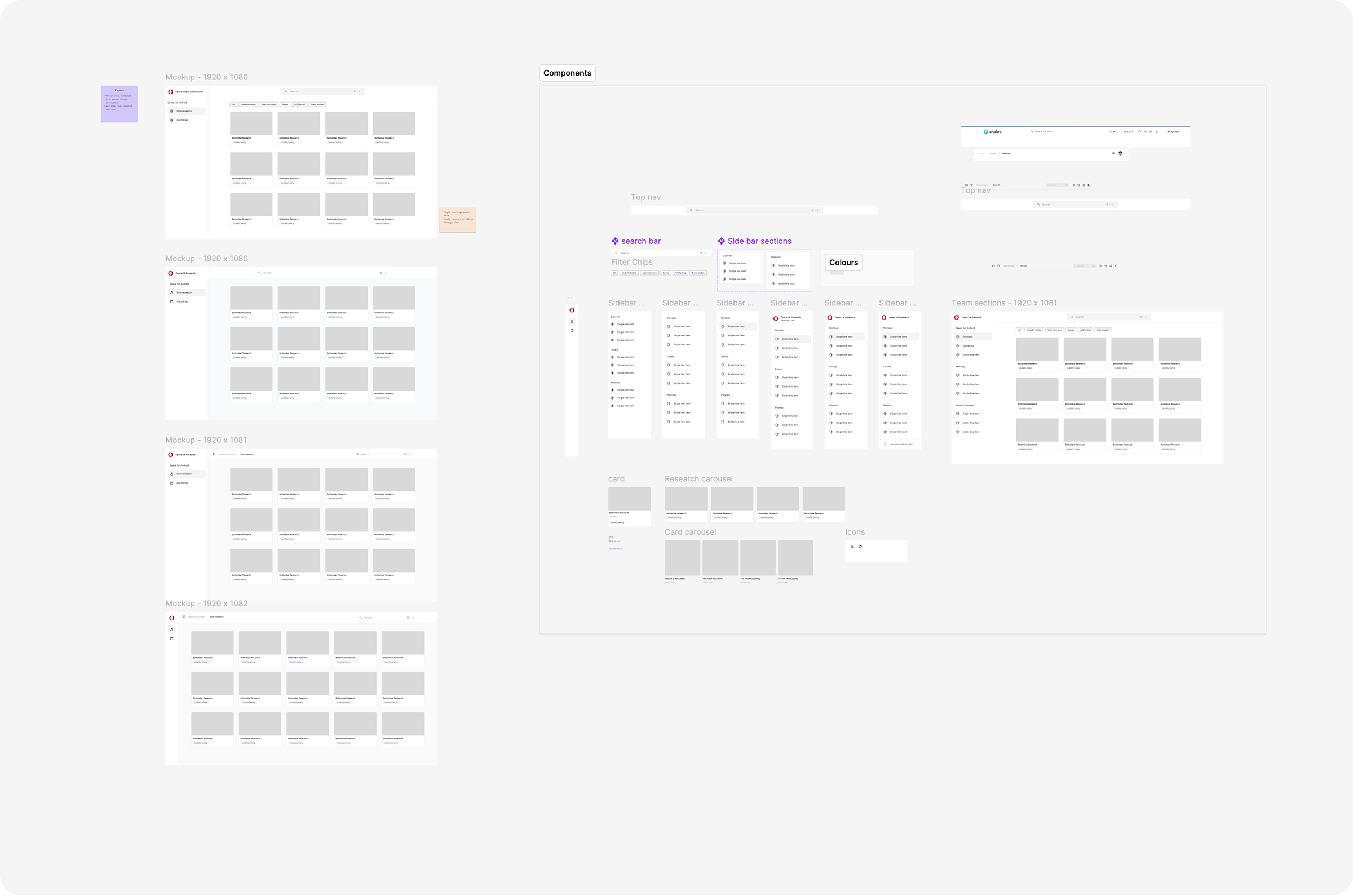
After initial feedback, I created a proof of concept to explore:
- How research could be structured
- How users would discover content
- How existing tools could support the experience
When I received feedback on the direction, I started developing the dashboard. I initially hosted it on Vercel, then later worked with DevOps to host the solution internally using real data and test how it could work beyond the initial group.
How It Works
The dashboard was built with Next.js and the Notion API. Users can browse research by team or category, then open an individual study to view its key details and access the full document.

Notion acts as the data source. Research is pulled from different pages via the API, converted into structured data, and reconstructed within the application.

Following feedback on the prototype, I added AI-generated summaries for longer research entries. They only appear when there is enough content to summarise, keeping shorter pages focused on the research itself and avoiding unnecessary API requests.

Challenges & Learnings
- Adding caching to reduce repeated requests and improve loading performance
- Understanding the Notion API and parsing content blocks
- Exploring where AI could support the discovery of research findings
- Working within existing CI/CD pipelines
Reflection
This project was a valuable and enjoyable learning experience in taking an idea from an initial suggestion through to a working internal prototype.
It gave me more confidence in identifying opportunities for improvement, proposing them to the team, and using design and development to demonstrate their value.